
I have always been a sports fan. As a young boy growing up in what was often referred to as the “golden age of hockey,” I looked forward to Saturday night and Hockey Night in Canada. I had never been to any of the original six hockey cities, but I knew who they were. As I got older and had children of my own, they became sports fans as well. When one of our children was about ten years old, his love of sports became obvious when he said, “First Wayne Gretzky retired, then Michael Jordan, and now Mrs. McCleod.” Mrs. McCleod was his kindergarten teacher, and clearly held in very high regard. So when my wife attended a conference in Chicago, I decided to tag along. My knowledge of the city was limited to sports teams and a few songs about Chicago. I arrived with a checklist: Soldier Field, the United Center, Wrigley Field, Guaranteed Rate Field, even Wintrust Arena beside our hotel. I thought I had my days planned. What I didn’t expect was that Chicago’s Lakefront would completely redirect my plans.
There are affiliate links in this post. If you make a qualifying purchase through one of these links, Wander Woman Travel Magazine may receive a small commission at no extra cost to you. Thanks for your support!
Table of Contents
A Detour Through Chinatown
On my first day, I set out simply to stretch my legs. That walk led me into Chinatown, where I spent hours wandering through shops and talking with business owners. When they discovered I was from Canada, conversations came easily. It was an unplanned and welcoming introduction to the city. But it was the next day, walking toward Soldier Field, that Chicago truly surprised me.
Related: Muskoka, Ontario: 48 Hours Exploring Deerhurst Resort and Ontario’s Scenic Trails
Grant Park: The Heart of Chicago’s Lakefront
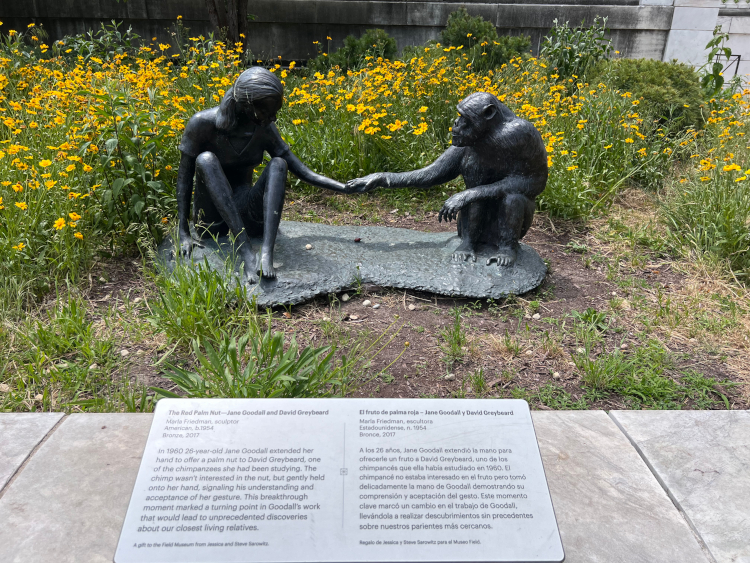
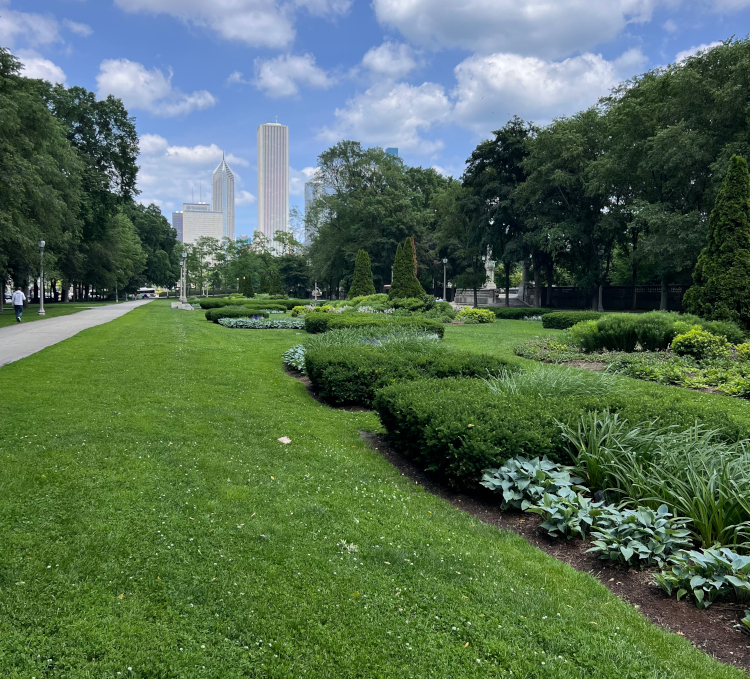
From our hotel I could see Soldier Field, but the walk there took me through Grant Park — a vast stretch of green space along Chicago’s Lakefront that felt more like a carefully curated outdoor museum than a city park. One of the first statues I encountered was a bust of Aaron Montgomery Ward, who fought tirelessly between 1890 and 1910 to preserve Chicago’s lakefront as open public space. Because of his efforts, the city’s “front yard” remains free and accessible today. Nearby stood statues of Theodore Thomas, founder of the Chicago Symphony Orchestra, and Major General John A. Logan, whose advocacy helped establish Memorial Day. History, art and civic pride were woven together throughout the park. Fountains, monuments and historical markers seemed to stretch endlessly. It was striking to see this much green space in the middle of the third-largest city in the United States.
Urban Gardens in the Middle of the City
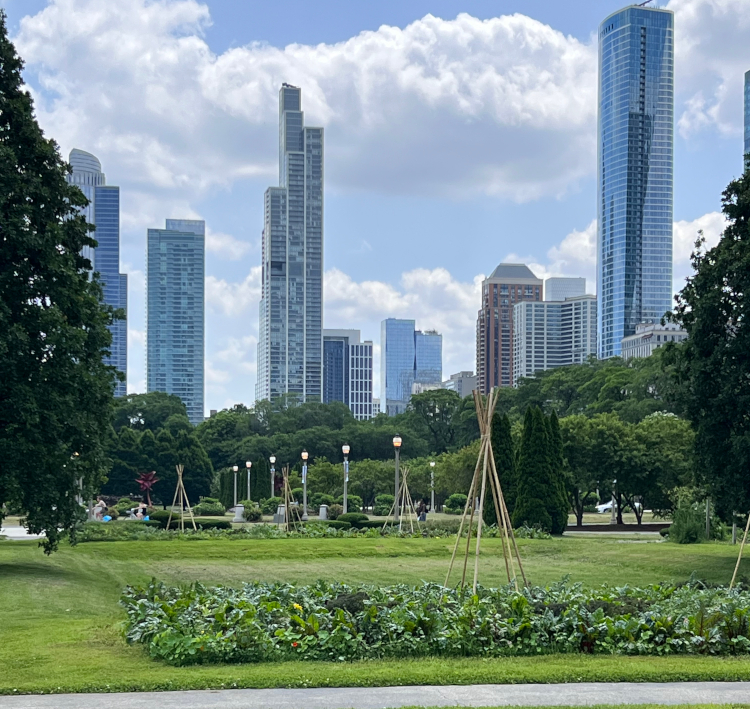
As I continued through Grant Park, I came across the Art on the Farm urban agriculture garden. Even early in the growing season, the kitchen garden was beautifully arranged with climbing vines and carefully planted rows. There are seven urban farms spread across 11 acres in this park area, an unexpected sight along Chicago’s lakefront. The blend of food, art and public space reflected a city that values more than just development.
A Fountain Worth Stopping For Chicago’s Lakefront
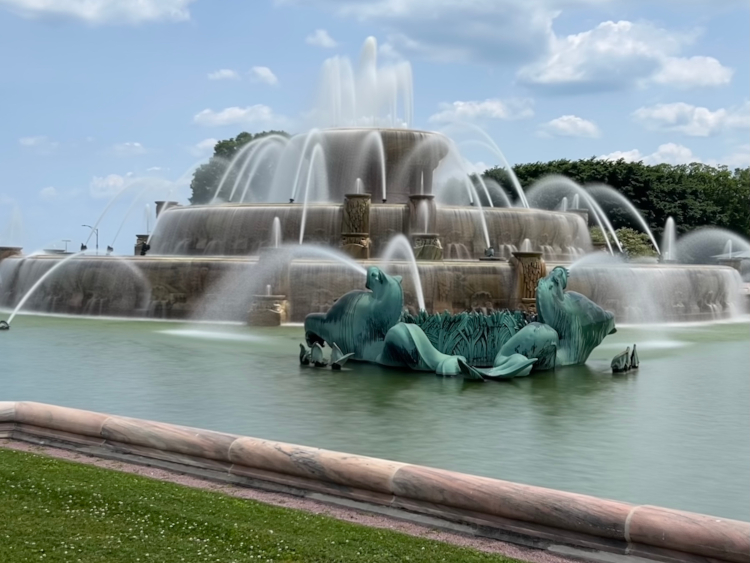
Eventually I remembered that I had originally set out to see Soldier Field. As I made my way toward the stadium, another unexpected sight stopped me in my tracks. A magnificent fountain rose in front of the Chicago skyline, with Lake Michigan stretching behind it. As a photographer, I couldn’t resist. I spent a long time circling the fountain, experimenting with angles and camera settings. During that time I discovered the fountain hosts a 20-minute water show every hour during the day, with jets shooting water as high as 150 feet into the air. After dusk, the displays are accompanied by music and lights. I immediately knew I would have to return later that evening to see it again.
Art Everywhere You Look
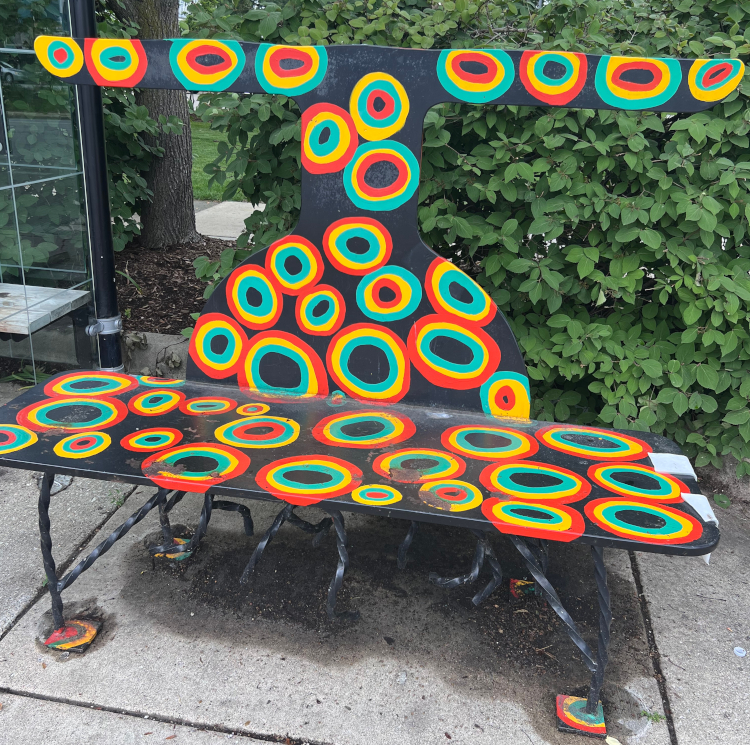
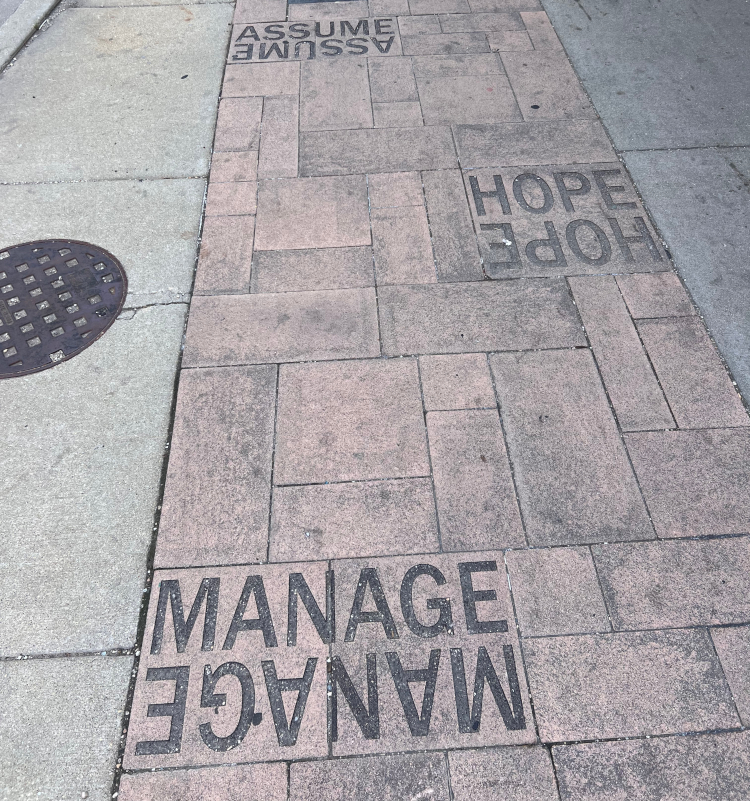
As I continued walking, I began noticing just how much art surrounded me. Words embedded in the sidewalk stretched for blocks, each offering a short message that made me stop and think. The benches were not typical park benches either, each one was a unique piece of art, different from the last. It slowly dawned on me that Chicago had far more to offer than the sports venues I had originally come to see.
Walking Chicago’s Lakefront Trail
Eventually I reached the waterfront itself and discovered the Lakefront Trail, a nine-mile pathway that runs along Lake Michigan. People were everywhere, walking, jogging, cycling and even riding in rickshaws. Some relaxed in the grass while others gathered for picnics or simply enjoyed the breeze coming off the lake. What impressed me most was the amount of open space. City leaders over the years had clearly chosen to preserve this area rather than fill it with high-rises or retail developments. In a city this large, that decision felt remarkable.
Finally Reaching Soldier Field
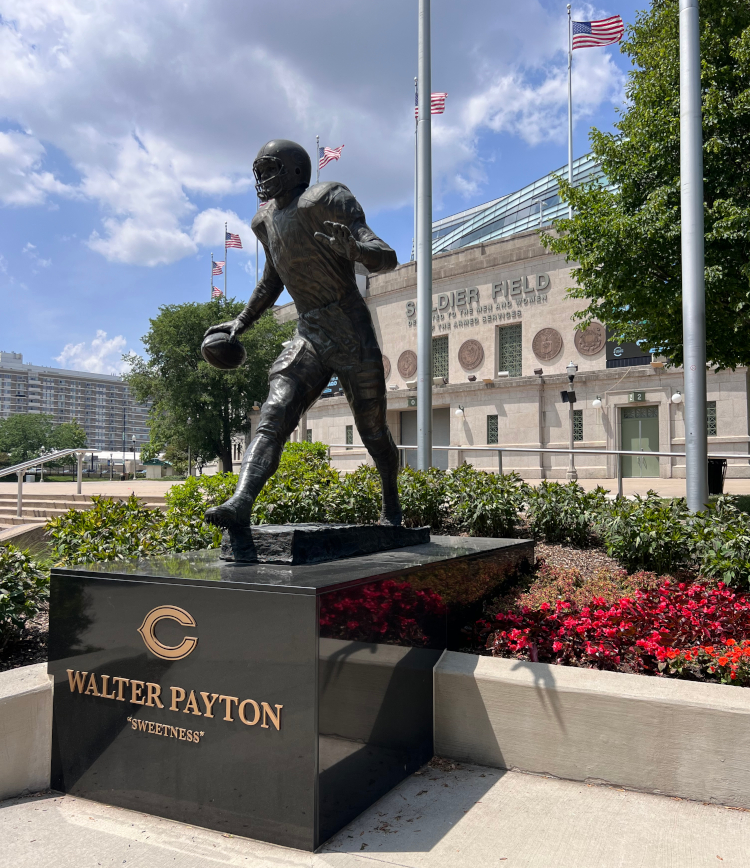
By the time I finally arrived at Soldier Field, I noticed a sign that read: “Soldier Field — a stadium in a park.” It was the perfect description. Nothing was happening at the stadium that day, so I had the area largely to myself as I wandered around. I made my way to the front of the stadium and admired the statues of Walter Payton and George Halas. As much as the sports fan in me appreciated the moment, it somehow felt less memorable than everything I had experienced earlier while walking through Grant Park.
Discovering Chicago’s Hidden History
On my last day, I set out on a simple errand: finding a pharmacy to pick up a few toiletries. Instead, I found myself walking along Martin Luther King Jr. Drive. The first monument I noticed was the Monument to the Great Northern Migration. The bronze sculpture is made from the soles of shoes, symbolizing the long and difficult journeys taken by African Americans who moved north after the Civil War. As I continued walking, I noticed bronze plaques embedded in the sidewalk at regular intervals. Each plaque featured the name of someone who had played an important role in Chicago’s cultural history, musicians, artists, activists and political leaders. Many of the names were unfamiliar to me, so I often stopped to look them up and learn more about their contributions. Eventually I came across a sign explaining that this area was part of “The Boulevards,” a 28-mile system containing 540 acres of green space. What was once on the outskirts of Chicago now forms a ring around the city. The longest section is Dr. Martin Luther King Jr. Drive, stretching about 4.5 miles. I had walked for more than an hour before realizing I still hadn’t found a pharmacy.
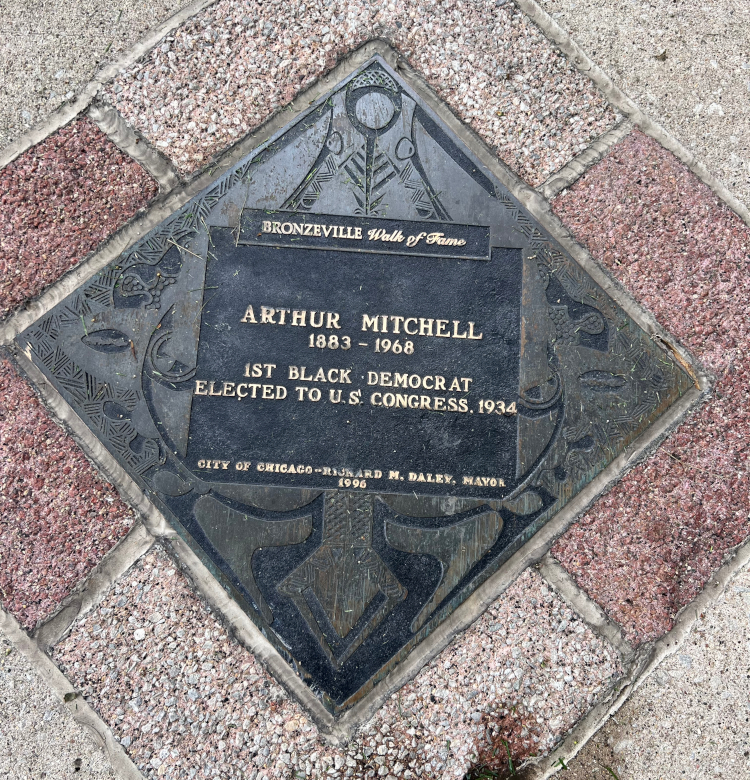
A Different Side of Chicago
On the walk back to the hotel, I noticed something that had become a recurring theme during my visit: the artistic benches lining the street. Each one was unique, adding character to the neighbourhood. By then it was clear to me that Chicago had an artistic and cultural side I had never expected. Of my original plans, I had only managed to visit one sports venue – Soldier Field – but I didn’t feel disappointed at all. In fact, I left deeply impressed by a side of Chicago I had never heard about before.If someone now asks me what there is to see in Chicago, sports stadiums will not be the first thing I mention. And next time I return, I’ll be looking for the hidden gems I’m sure are still waiting to be discovered.
Plan your Trip to Chicago
If you’re planning your own trip to Chicago, staying near the lakefront makes it easy to explore many of the parks, trails, and neighbourhoods mentioned above. Here are a few options depending on your budget:
Budget: Hotel Saint Clair Chicago — A simple, affordable stay just steps from the Magnificent Mile and within easy reach of the lakefront.
Mid-range: Hilton Garden Inn Chicago Downtown South Loop — A reliable, comfortable option with a great location near Grant Park and the lakefront.
Luxury: Loews Chicago Hotel — A modern, upscale stay with lake views, a rooftop bar, and an easy walk to many of the city’s top sights.
No Comments